

Don't let your head be turned by 5,000MHz RAM kits, high-speed gaming memory makes no sense | PC Gamer - lightnerrater1974
Don't let your head be turned by 5,000MHz RAM kits, high-velocity gaming memory makes no sense
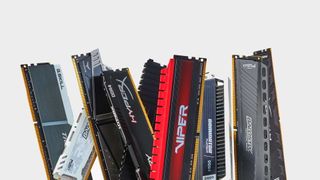
How much impact does system of rules memory have on gaming performance? IT's a subject we sporadically like to return to, especially when things change. That happened when Intel discharged the 11th Gen Rocket Lake weapons platform and the idea of decoupled Gear 1 and Gear 2 memory with promises of super high-hie RAM.
Compared to the 10th Generation Cores, the 11th Gen platform introduced a fundamental change to the memory subsystem, which decouples the memory controller and memory frequency.
A while back we conducted a barrage of tests with AMD's Ryzen 5000 series, stretch the conclusion that DDR4-3600, with good timings, provided a good sweet blot plane of performance, and that you shouldn't do i money chasing RAM speed for gaming. This fourth dimension we're using Intel's 11th Generation Core i9 11900K, with its promise of enthusiast-level memory overclocking performance.
Take in things changed, with the potential difference for 5,000MHz memory kits, and are we looking at a world where superior memory has a touchable performance impact on our gaming machines? Again, it's a no from U.S.A.
Intel CPUs take traditionally run the memory control and memory clock at the same speed, or 1:1 with for each one new. 11th Gen Eruca vesicaria sativ Lake CPUs introduce an option to set the memory controller at one-half the speed of the computer storage time, operating room 1:2. Intel refers to 1:1 mode as Gear 1 and 1:2 fashion as Geartrain 2.
For case, at DDR4-3200 with Gear 1, the retentiveness and memory controller are both running at 1,600MHz (think back that DDR refers to two-baser information rate). When Gear 2 is elect, the memory speed would be 1600MHz while the memory controller is low to 800MHz.
Test system
Test Trucking rig
RAM: TeamGroup ARGB DDR4-3600 2x 8GB; G.Science TGrident Z Royal DDR4-4000 2x 8GB
CPU: Intel Core i9 11900K
Cooler: NZXT X73 360mm AIO
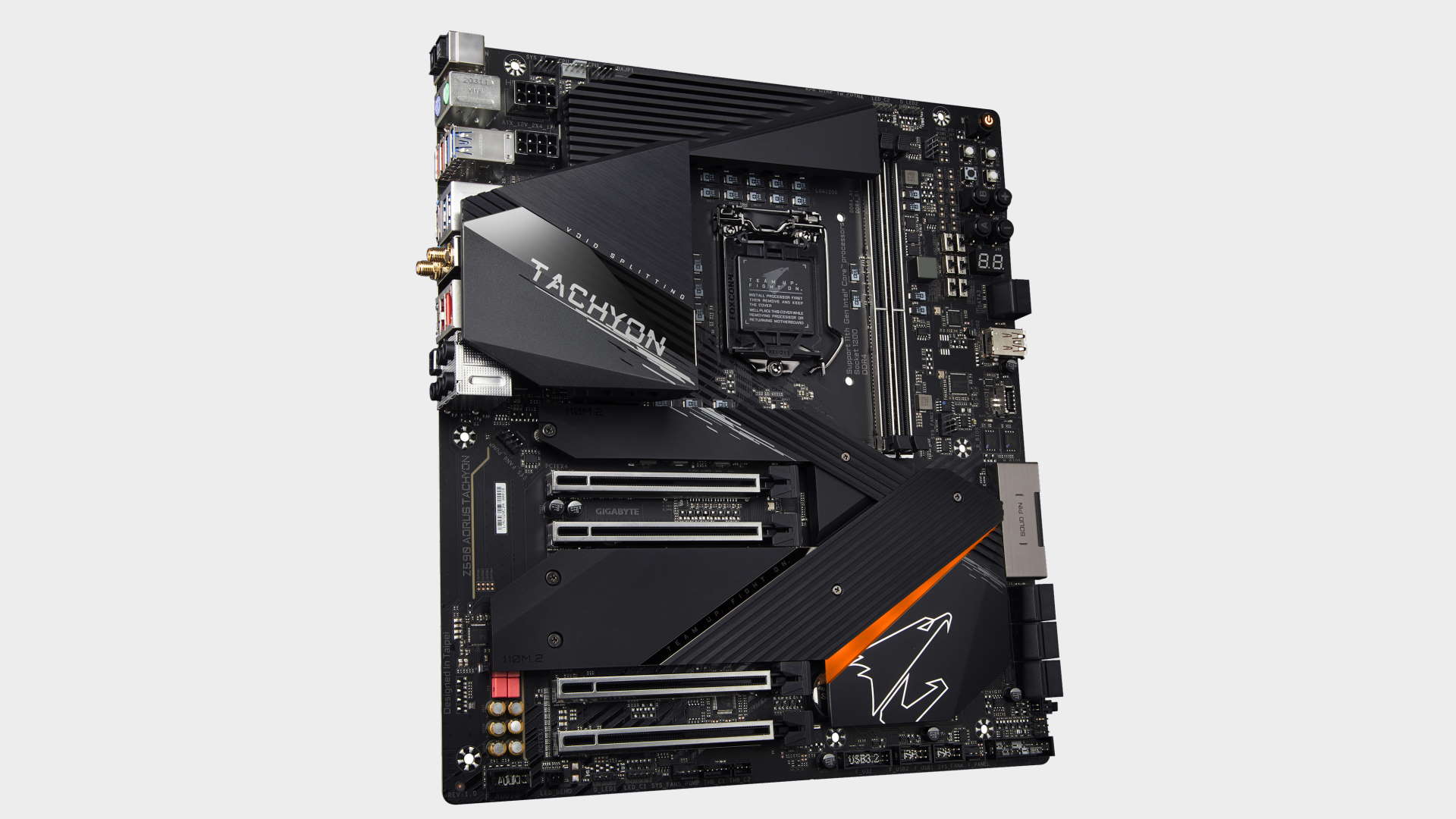
Motherboard: GB Z590 Aorus Tachyon
GPU: MSI RTX 3080 Gaming X Trio
PSU: Barbary pirate AX1000
Store: Adata XPG Gammix S70 2TB SSD
OS: Windows 10 Pro 64-bit (20H2 update)
Our test system consists of an Intel i9-11900K, laid to run around at a thin 5.0GHz. This is to ensure that changes to the memory subsystem are Thomas More intelligibly visible, and not unduly affected past turbo modes jumping every last o'er the place.
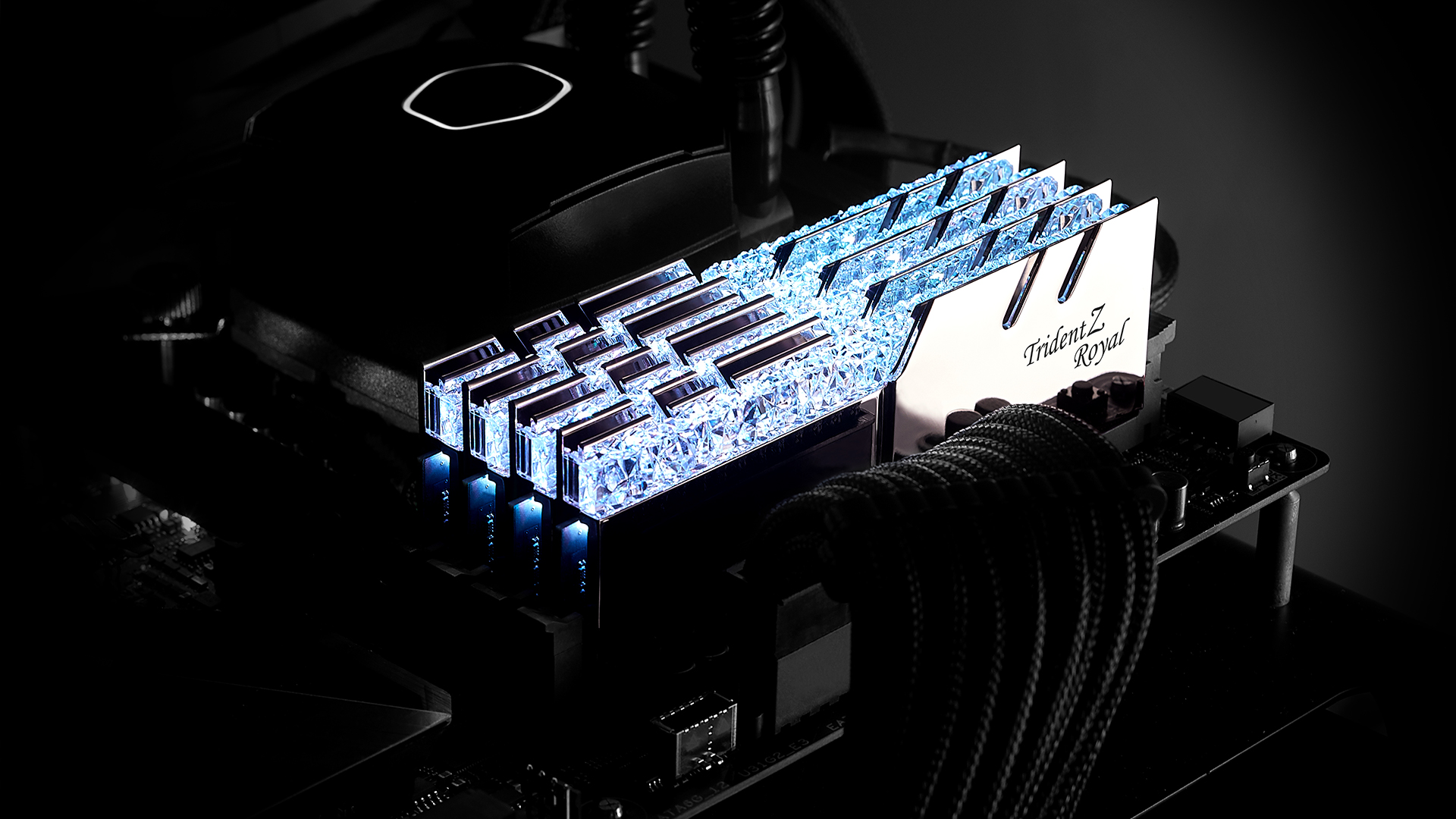
To date, the Gigabyte circuit card is the the only Z590 that's let us test the particular G.Acquisition DDR4-4000 Trident X Royal kit we'rhenium using at DDR4-4800 with complete stability, albeit at voltages we'd non recommend for a 24/7 user. We're also using a set of TeamGroup Xtreem ARGB DDR4-3600.
Both kits make apply of the fancied Samsung B-Die, which is a popular of overclockers thanks to their ability to pass around leakproof timings at a given speed. Most of the denounce virgin Rocket Lake optimised DDR4-5000 kits, along the new hand, are victimization Hynix or Micron IC's. Are they impressive? Yes. Hardheaded? No. Expensive? You'd amend believe it.
Coincidentally, some Intel 11th Gen and AMD Ryzen 5000 CPUs—despite organism wildly different architecturally—really behave in similar ways when it comes to memory. Much like Infinity Fabric in 1:1 mode, Gear 1 whole shebang like a charm up to around DDR4-3600, but from there it gets a great deal more difficult, and a switch to Gear 2 is requisite.
Yet with a purpose-built OC motherboard, such as our Gigabyte Z590 Aorus Tachyon, DDR4-4000 at Gear 1 resulted in a no office. In our testing 3,733MHz was able additionally, but IT required far too much Sturmarbeiteilung electromotive force to make further examination worthwhile.
Methodological analysis
In a perfect reality, we'd test at umteen different speeds and timings, and flatbottom look at different capacities. That's upright not possible unless a week surgery 3 without sleep is an choice. We began with a try out at DDR4-2400. This speed is well-nig irrelevant in today's market, however, but information technology's still a standard JEDEC system of rules default and we've included the results as a baseline. Running with Gear mechanism 2 makes no sense at this speed as you lose overly much carrying into action.
DDR4-3200 at 16-18-18 reflects the charitable of outfit that you'll retrieve in many 2021 gaming systems. This speed, along with DDR4-3600, occupy the terms/performance sweet spotlight for some Intel and AMD systems.
We tested at 3,600MHz with tight timings then we can see how a high spec 3,600MHz kit up at Gearing 1 compares to a 4,800MHz kit up at Gear 2. We don't have one of the very latest 5000MHz + kits present, but our trusty G.Skill 4000 C15 kit is good for 4,800MHz, and it's still a damn tight fructify of Ram down in anyone's spoken language.
We chose to run DDR4-4400 and DDR4-4800 at identical timings strictly to see the effect of the increased frequency and memory controller clock.
For our analysis, we tested four games. They are the same games we utilized in our Ryzen memory analysis article. They are F1 2020, Horizon Zero Dawn, Metro Book of Exodus and an anile favourite, Civilization VI. The superior of a driving game, a third person process game, a first-person shooter and a strategy game means that we have a good mixing of game genres and engines.
We've tested at 3 varied settings. 1080p at low settings with a GeForce RTX 3080 which puts the performance bottleneck on the CPU and memory subsystems instead of the GPU. This means changes in memory speeds and timings express ascending a good deal more easy. It's too extremely relevant information for competitive gamers and users with high refresh rate monitors where maximising FPS is ultimately desirable.
Next is 1080p with maximum graphics settings. 1440p is taking over simply many gamers are rocking adaptive sync 1080p screens, and will execute for some futurity. A card wish the RTX 3080 can still be bottlenecked at 1080p even with maximum settings enabled.
4K testing at maximum settings is noteworthy to show what, if any, effect Gear 1 and 2 has in graphics limited scenarios. Non everyone is jetting the latest and greatest GPUs so this information can be useful for gamers who are GPU minor with with older operating theatre get down spec cards.
Results

In gambling Geartrain 2 should be totally unheeded at speeds where Gear 1 is able to fly the coop.
The first affair to check out are the pairs of DDR4-3200 and DDR4-3600 results. This is proof that in gaming Gear 2 should be totally ignored at speeds where Gear 1 is able to run.
The simply exclusion is if you are trying save a few watts of power which power be relevant if you'Ra running a locked 65W Central processing unit operating theater facing throttling issues. Under a high graphics load the differences are quite minimal just the possibility of gift up 10% or even 20% of potential performance in the cause of F1 2020 way you should use Geartrain 1 wherever feasible.
1080p memory performance
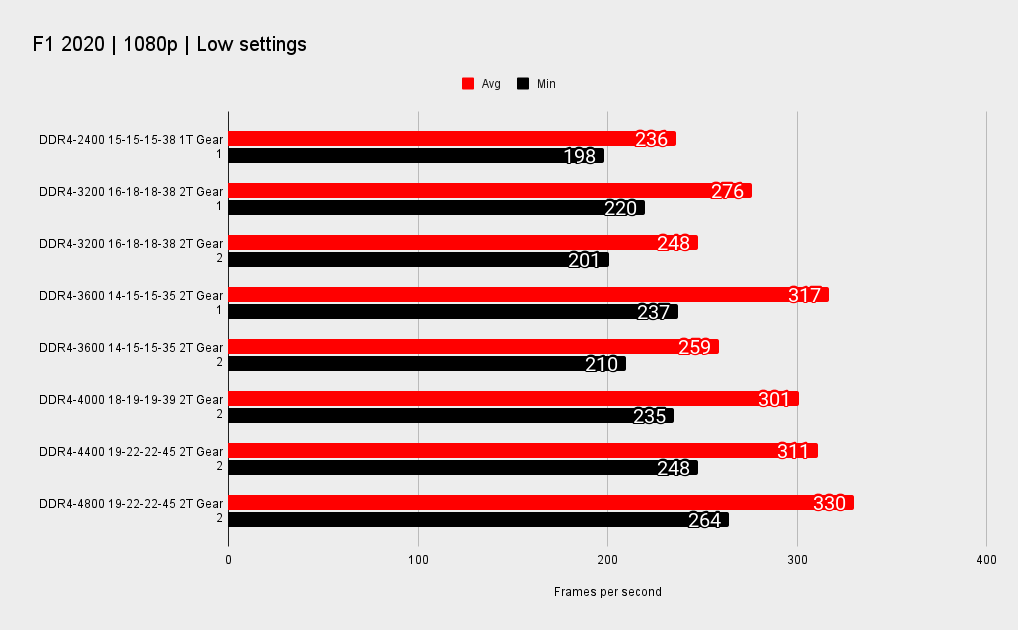
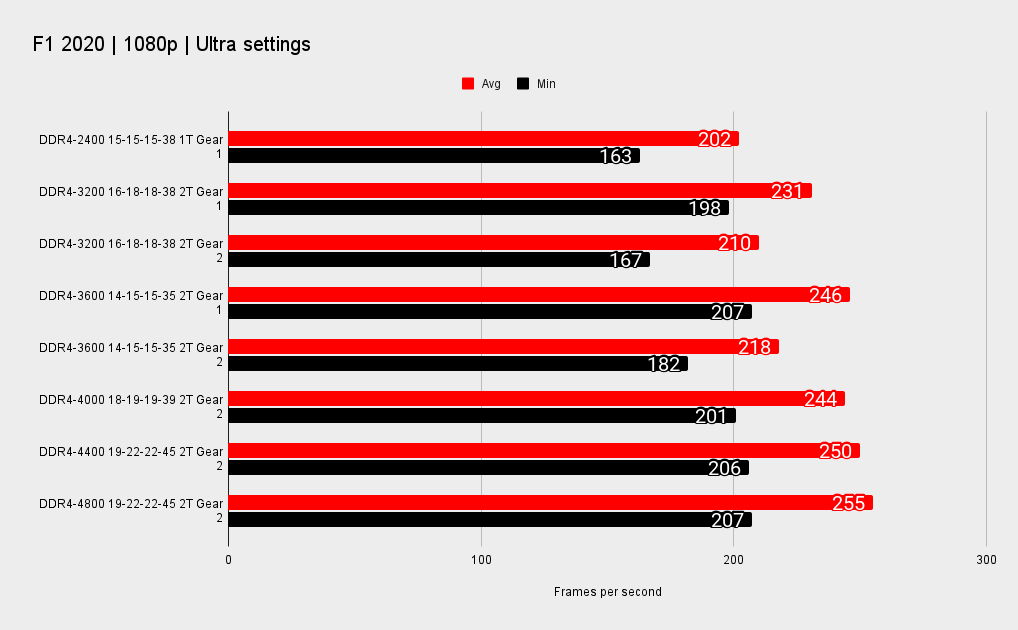
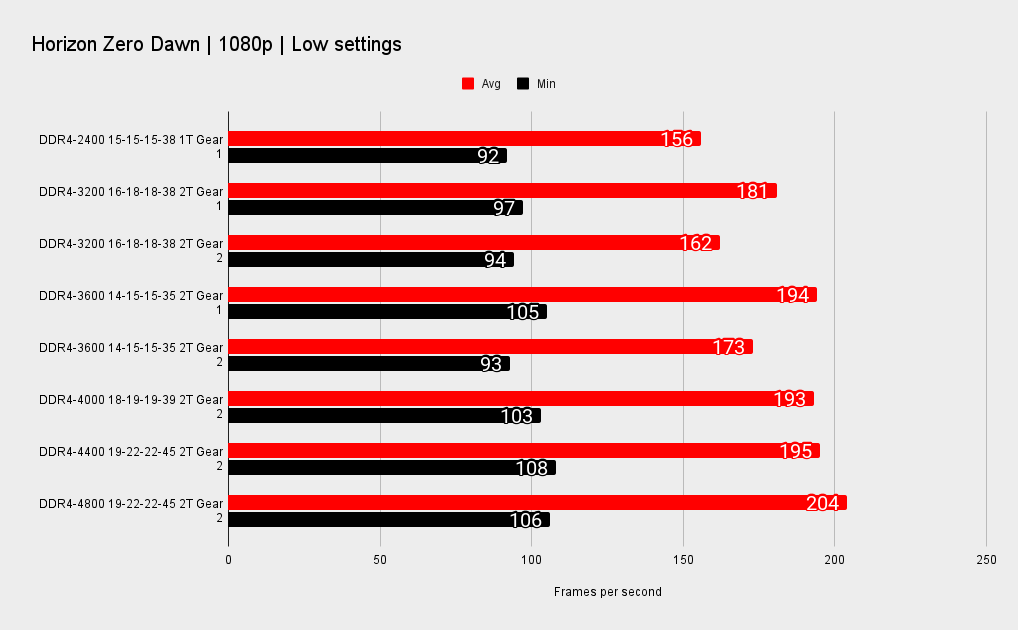
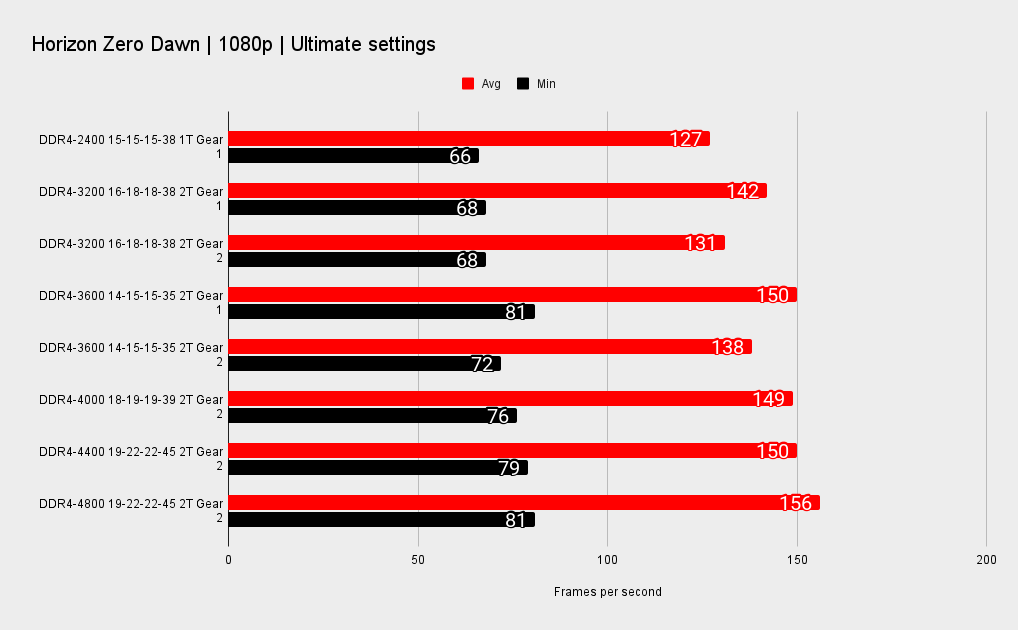
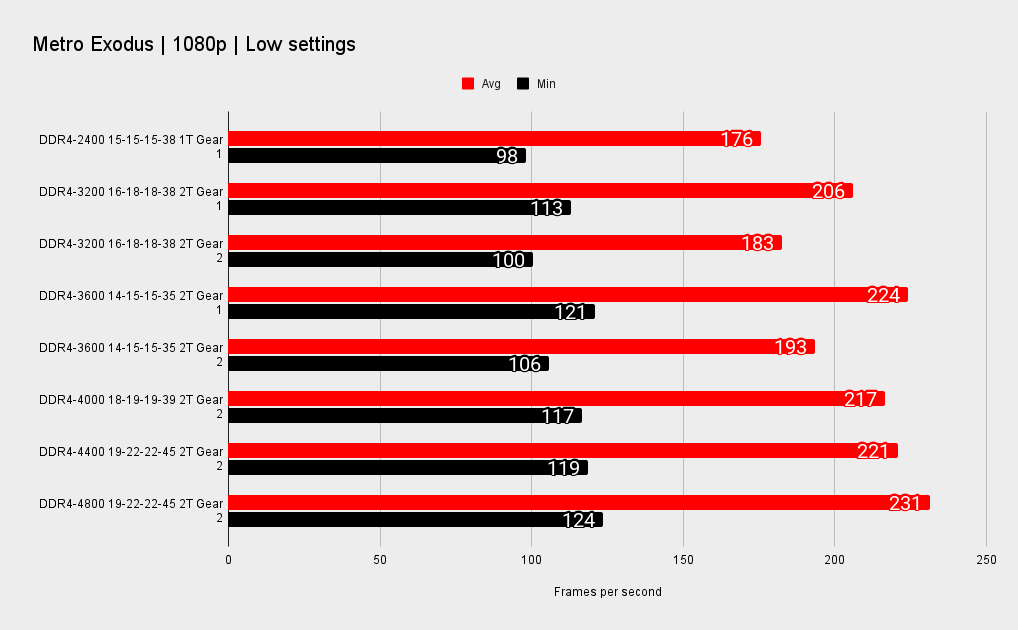
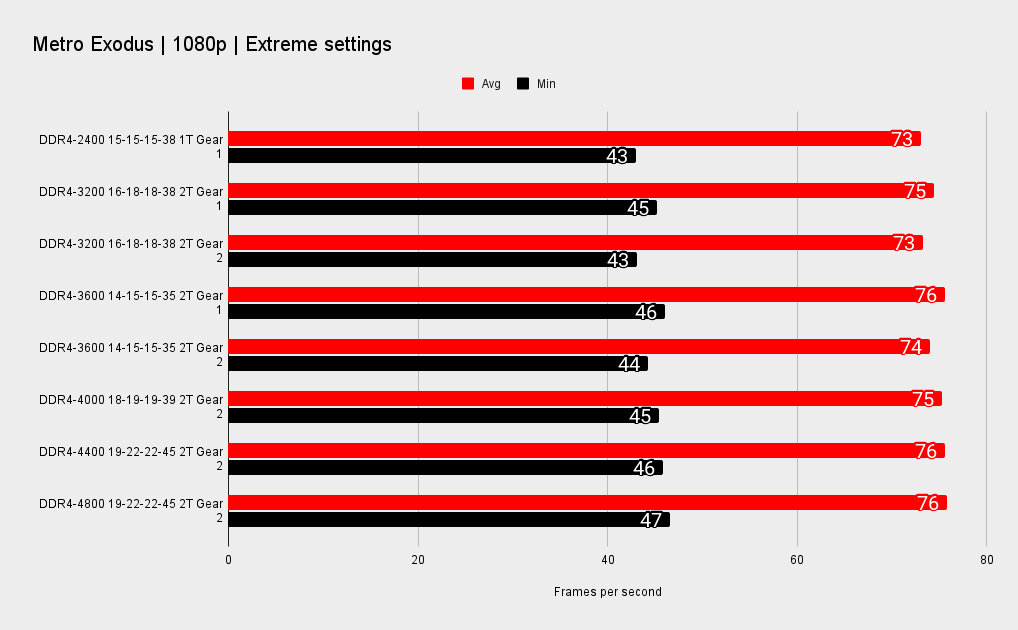
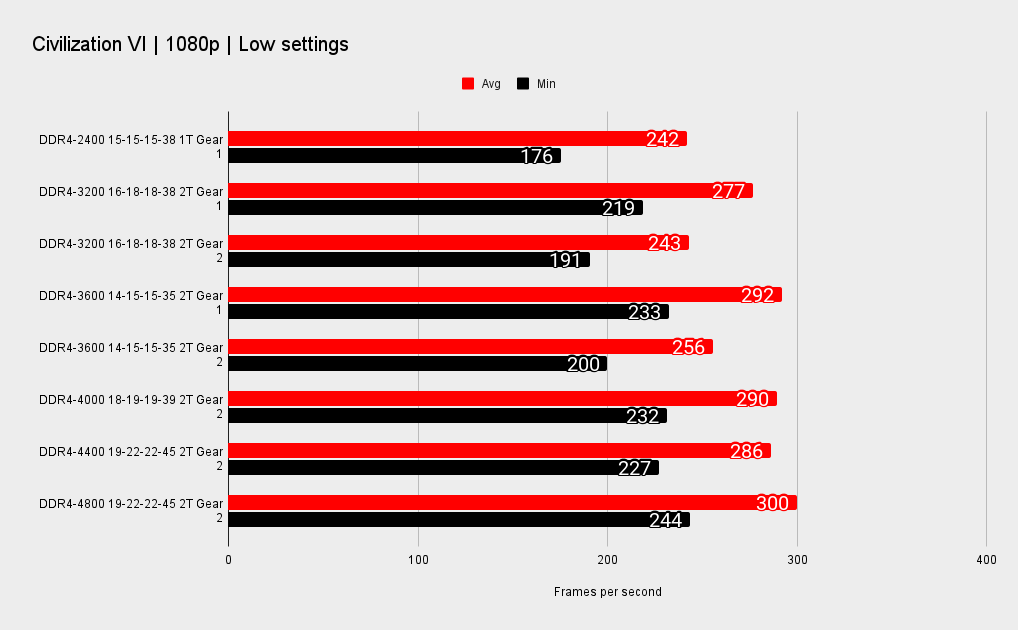
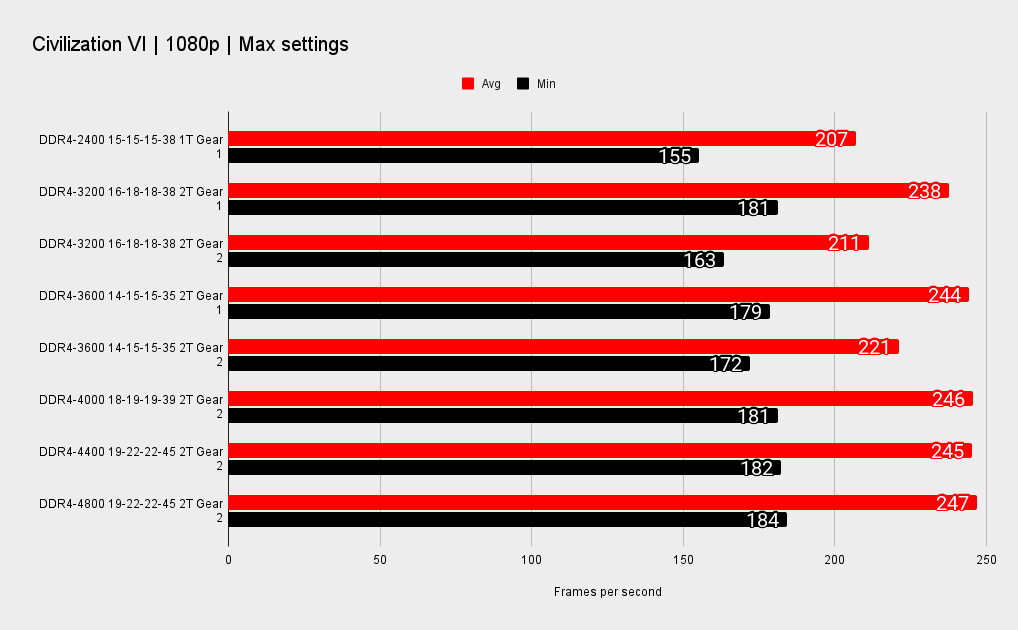
Things become stimulating once you locomote beyond DDR4-4000 where you'Re required to use Gear 2 to smash those speeds. If you're chasing high FPS then there is a shell to create for very top-bucket along RAM. The inquiry is whether a 5% remainder Oregon thereabout is worth the expense of going from a quality 3,600MHz outfit, with baritone timings at Gear 1, to a very piercing hie outfit that's fast enough to overcome the storage controller speed trade-off.
Which path you choose will bet on the rest of your system of rules; 3200MHz at Gear 1 will suit a Core i5 11400F and RTX 2060 scheme, simply a system with a Nucleus i9 11900K and GeForce RTX 3090 will gain a trifle from moving to very quick RAM. Actually, career it 'gain' is a bit of a misnomer, IT's to a greater extent about minimising a potential bottleneck in selected high FPS scenarios.
In almost all sane cases, it's non deserving the expense. But if you've got a lambo in the private road, who cares? Take to IT.
4K memory performance
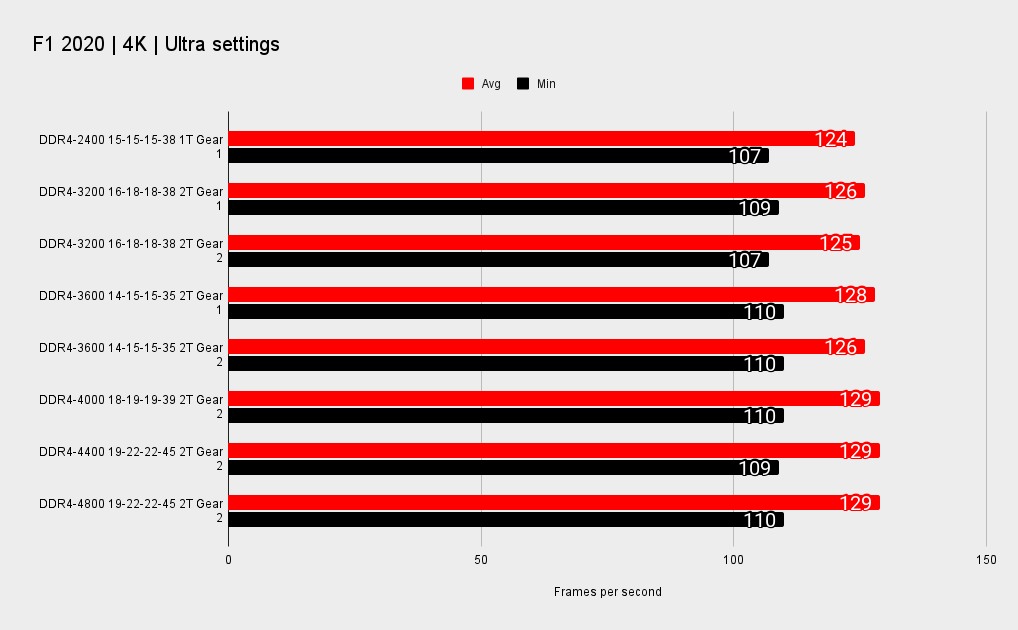
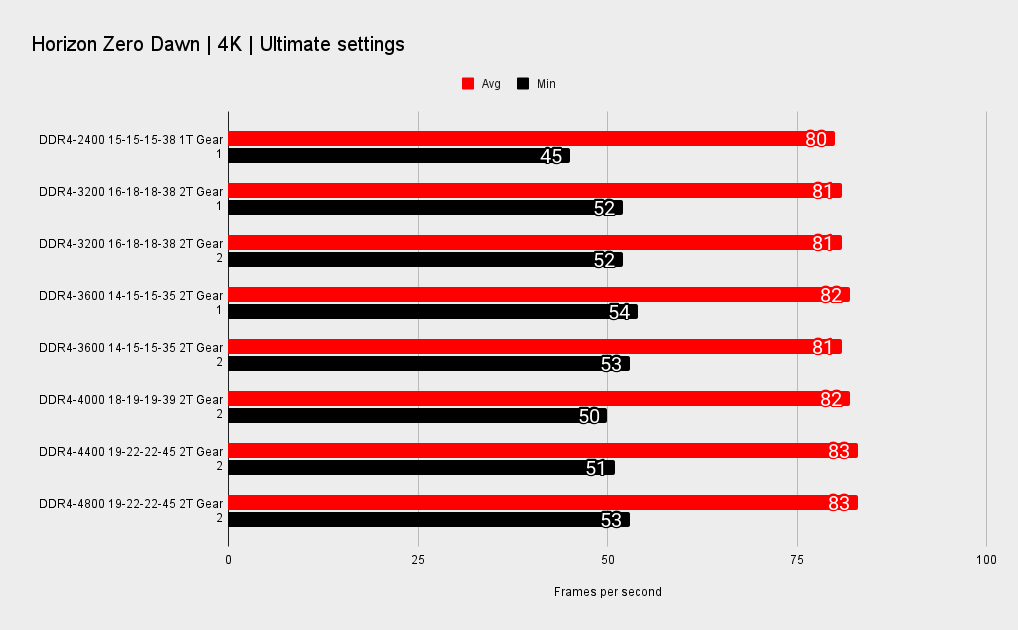
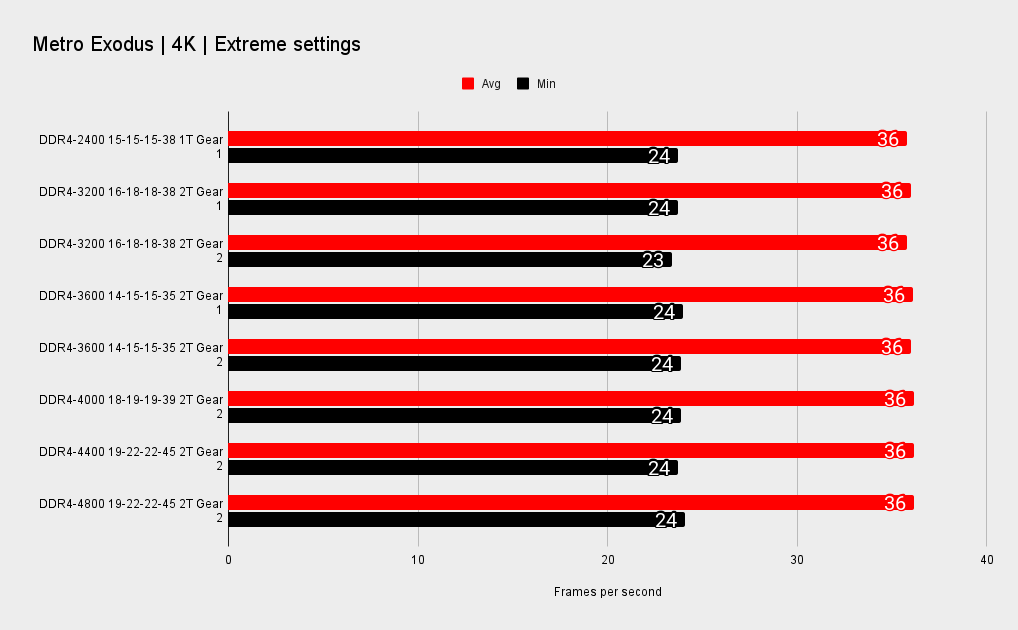
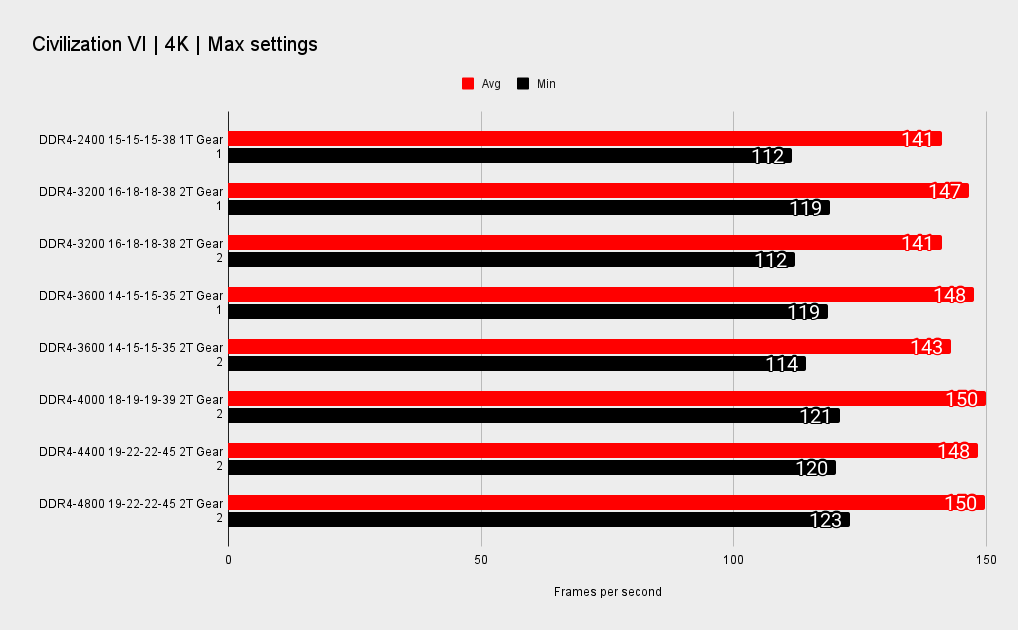
At the other end of the spectrum, thither's basically no reason to go for computer storage slower than DDR4-3000. Reusing a kit from an experient scheme volition suffice the task with Geared wheel 1, but if you're buying new, then 3,200MHz should be considered the service line, with 3,600MHz the sweet spot for performance and appreciate for money.
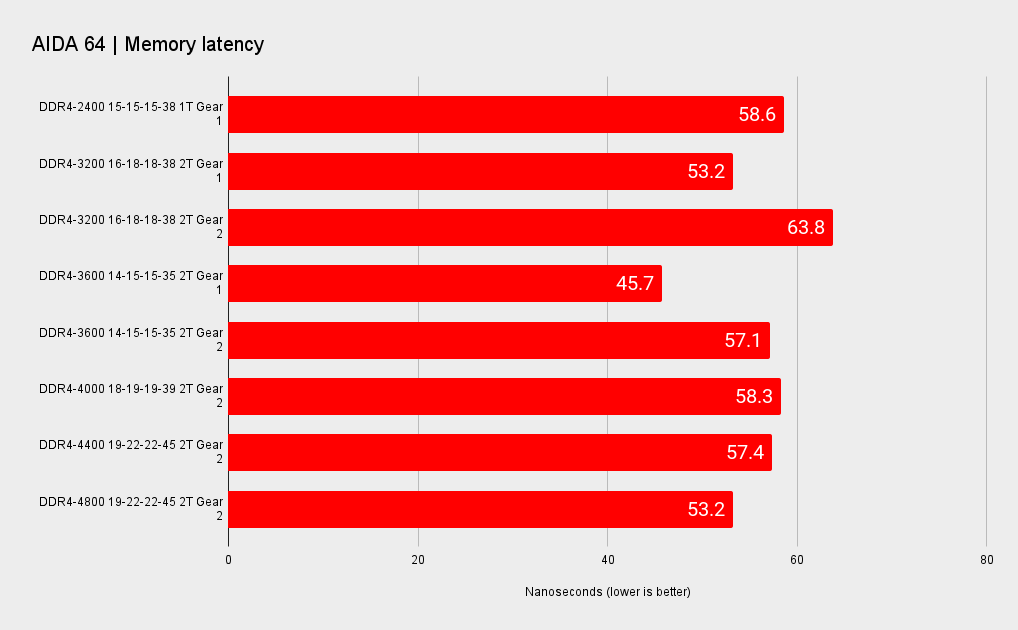
A good specify of 3,600MHz at Gear 1 delivers near low latency and well rounded carrying into action that leave suit everyone from a CS:XTC player chasing hundreds of FPS, to a multi-screen sim racer, or a Cyperpunk 2077 player immersed in Night Urban center. Unless you've got a top spec system of rules to match, or plan to overclock your system until it smokes, there's genuinely very little reason to lot the big money for in no time memory and single digit performance gains.
Stopping point
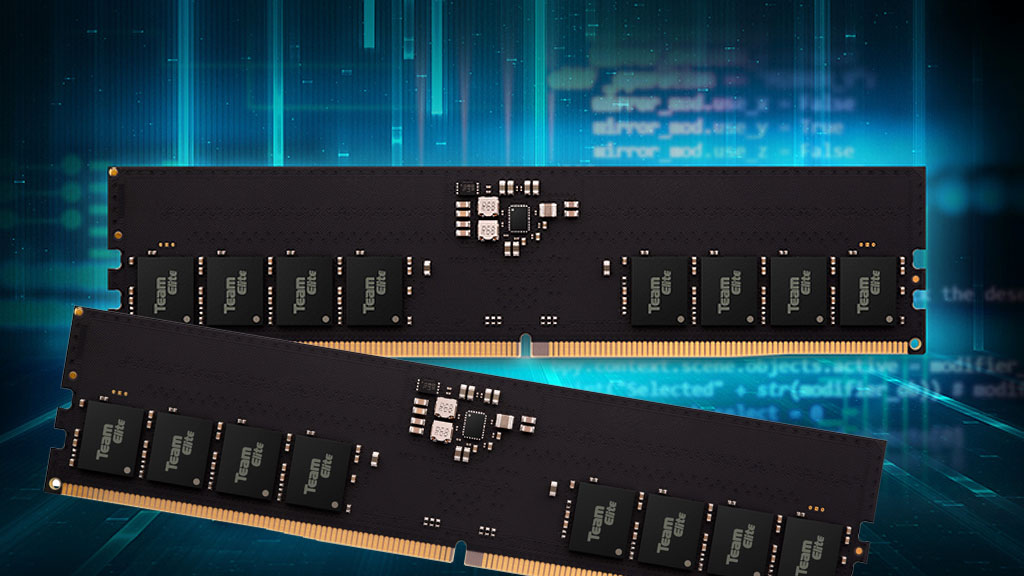
Purchasing computer memory faster than 3,600MHz but slower than 4,400MHz is a complete waste of money.
The conclusion is that, like a Ryzen-founded gaming PC, a Garden rocket Lake system is top-quality served by a set of DDR4-3600 with decent timings at Gearing 1. You need to short-circuit 1,000MHz higher in memory time at Train 2 rightful to match it in performance.
That substance purchasing memory that's faster than 3,600MHz, but slower than 4,400MHz, is a complete waste of money. Moving to the 4,600MHz+ range is enough to offset the Gear 2 performance trade off, but then you're looking at stipendiary bigger bucks. And at that taper off you would follow far better off allocating those extra funds towards a better Mainframe or GPU.
But then DDR5 is looming, which will change things erstwhile more, so we'll be doing altogether this again in time…

Chris' gaming experiences go book binding to the mid-nineties when he conned his parents into buying an 'educational PC' that was conveniently overpowered to play Doom and Tie Fighter. He mature a love of extreme overclocking that scorched his savings contempt the cheaper hardware on offer via his Book of Job at a PC store. To give more LN2 he began moonlighting as a reader for VR-Partition before jump the fence to work for MSI Australia. Since then, he's gone back to journalism, sky-high reviewing the latest and greatest components for PC & Tech Authority, Microcomputer Powerplay and presently Continent Personal Computer magazine and Personal computer Gamer. Chris nevertheless puts far as well more hours into Borderlands 3, always striving to become a Sir Thomas More efficient killer.

Source: https://www.pcgamer.com/intel-memory-gear-1-vs-gear-2-pc-gaming/
Posted by: lightnerrater1974.blogspot.com
0 Response to "Don't let your head be turned by 5,000MHz RAM kits, high-speed gaming memory makes no sense | PC Gamer - lightnerrater1974"
Post a Comment